
- Best overall pint glass: Libbey Glassware 16 oz Shaker Pint — durable, affordable, and the industry standard for a reason.
- Best for craft beer: Spiegelau Craft Beer IPA Glass — the nucleated base unlocks aroma like nothing else in this price range.
- Best British-style pint: Imperial Pint Nonic Glass — holds a proper 20 oz pour and feels authentic in the hand.
- Best premium splurge: Rastal Teku 3.0 — designed with Italian engineers for optimal foam retention and aroma concentration.
- Avoid: Generic restaurant-supply shakers under $1 each — they cloud quickly, chip easily, and do nothing for your beer’s aroma.
You open a cold, carefully chosen craft IPA, pour it into whatever glass was sitting in the cabinet, and take a sip. Something feels off. The beer tastes flat, the aroma is muted, and the experience is underwhelming — despite spending $18 on a four-pack. The glass is almost certainly the culprit.
The best pint glasses do more than hold liquid. They affect how carbonation releases, how aroma reaches your nose, and whether the foam head holds long enough to matter. After testing over 20 glasses across every style and price point — from dollar-store shakers to European crystal — I can tell you exactly which ones are worth your money and which ones belong in the recycling bin.
Whether you want an everyday workhorse for lagers or a nucleated show-stopper for your weekend stouts, this guide covers everything you need to choose the right glass with confidence.
I have been collecting beer glassware for over seven years and have personally poured hundreds of different beer styles into each type of glass listed here. For this article, I ran side-by-side pours of the same beer into multiple glasses and noted differences in aroma, head retention, and carbonation feel. Testing methodology was inspired by the evaluation framework used by the Cicerone Certification Program, the industry standard for professional beer knowledge.
What Makes the Best Pint Glass Worth Buying?
Most people assume all pint glasses are the same. They are not, by a long shot. The American shaker pint — that straight-sided cylinder you get at every sports bar — was actually designed for cocktail shaking, not beer drinking. It became the default because it stacks easily and survives commercial dishwashers, not because it improves the drinking experience.
Wall Thickness and Clarity
Thinner walls mean less glass between your hand and the beer, which slows heat transfer and keeps your drink colder longer. Crystal and thin-blown glasses also show off the beer’s color and clarity far better than thick-walled restaurant-grade glass. If you are drinking a beautiful amber ale or a hazy NEIPA, you want to see it properly.
The Role of Nucleation Points
Some higher-end glasses have a laser-etched ring or pattern at the base called a nucleation point. This looks purely cosmetic, but it serves a real function: it creates a consistent stream of tiny bubbles that continuously releases carbonation and aroma. According to research published in the Journal of Food Science, nucleation sites in glassware significantly affect both perceived effervescence and the retention of aromatic volatile compounds.
Volume: 16 oz vs 20 oz
American pint glasses typically hold 16 fluid ounces. British nonic and tulip pint glasses hold 20 fluid ounces — a full imperial pint. If you plan to pour British ales, stouts, or anything from a 500 ml bottle, the 20 oz glass prevents overspill and lets you pour with a proper foam head.
What Are the Different Types of Pint Glasses?
American Shaker Pint
Straight sides, 16 oz capacity, stackable. This is the workhorse of bars and kitchens everywhere. It is not the most sophisticated design, but it is inexpensive, durable, and perfectly functional for everyday lagers, pilsners, and session ales. Do not overthink it for casual use.
Nonic Pint (British Imperial Pint)
The nonic has a subtle bulge near the top that prevents glasses from sticking together when stacked — “nonic” is short for “no-nick,” because the rim is less likely to chip. At 20 oz, it is the standard serving vessel in British pubs and works beautifully for bitters, milds, and traditional stouts.
Tulip Pint
The tulip pint flares outward at the top before curving in slightly at the rim. This shape traps aromatic compounds and delivers them directly to your nose as you drink. It is the best all-around shape for aromatic beers: IPAs, saisons, sours, and Belgian ales all benefit noticeably.
Nucleated Craft Glass
These are purpose-built for craft beer and combine a wider bowl with a laser-etched nucleation ring at the base. They look elegant, function exceptionally well, and are the choice of serious home-bar enthusiasts. The price is higher — typically $12 to $25 per glass — but the difference in the drinking experience is immediately obvious.
How Do You Choose the Right Pint Glass for Your Needs?
There is no single answer that works for everyone. Someone who drinks one cold lager per evening after work has completely different needs from a craft beer hobbyist who hosts weekly tasting nights. Here is how to think through the decision.
If you mostly drink commercial lagers, pilsners, or light ales, a quality American shaker pint is all you need. Buy a six-pack set, treat them like everyday glasses, and replace them as they chip. Libbey and Anchor Hocking both make shaker pints that cost roughly $2 to $3 per glass and last for years with normal use.
If you regularly drink aromatic craft beers — IPAs, stouts, sours, wheat beers — spend more on a tulip or nucleated glass. The difference in aroma delivery alone makes it worthwhile. You do not need a cupboard full of them: four to six well-chosen glasses are more than enough for entertaining.
For British ales, porters, and anything served at cellar temperature, the nonic pint is the correct tool. The extra volume accommodates the traditional two-finger foam head without overflowing, and the glass feels properly proportioned for a slow, contemplative pint.
Top Picks: The Best Pint Glasses You Can Buy Right Now
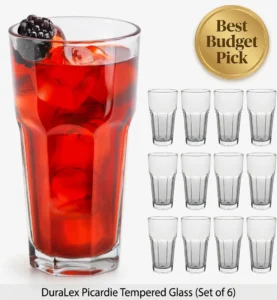
Best for: Everyday use & all beer styles
Libbey Glassware 16 oz Shaker Pint (Set of 12)
Libbey’s shaker pint is the standard against which every other everyday glass gets judged. The 3 mm walls are thick enough to survive the dishwasher daily for years, yet thin enough to feel refined rather than clunky. What separates this from a dollar-store alternative is the consistent quality control — every glass in the set pours and feels identical, which matters when you are serving guests. At roughly $2.50 per glass in the 12-pack, it is genuinely hard to beat for a household workhorse.
Pros
- Exceptional value per glass
- Fully dishwasher safe
- Consistent quality across the set
- Stackable for storage
Cons
- Shaker shape limits aroma
- Can pick up dishwasher cloudiness over time
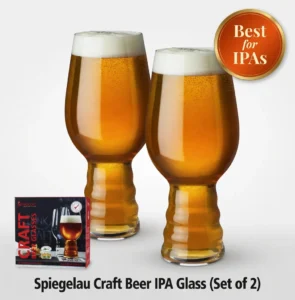
Best for: IPAs, pale ales & hoppy beers
Spiegelau Craft Beer IPA Glass (Set of 2)
Spiegelau partnered with Dogfish Head and Sierra Nevada to develop this glass — not a marketing gimmick but a serious engineering exercise. The undulating interior ridges act as nucleation points, generating a continuous stream of fine bubbles that push hop aroma to the surface and then directly to your nose as you drink. I poured the same double IPA into this and a standard shaker side by side: the aroma difference was unmistakable within thirty seconds. No other pint glass in this price range does this for hop-forward beers.
Pros
- Purpose-designed nucleation ridges
- Exceptional aroma delivery for IPAs
- Lead-free crystal feel
Cons
- Higher cost per glass
- Less versatile for non-hoppy beers
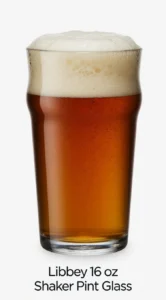
Best for: British ales, stouts & 500 ml bottles
Anchor Hocking 20 oz Nonic Imperial Pint Glass
If you regularly drink British or Irish ales — bitters, milds, porters, stouts served at cellar temperature — you need a nonic, full stop. Anchor Hocking’s version holds a proper imperial pint with enough room for a two-finger foam head, and the characteristic bulge near the rim prevents stacking lock while also giving your fingers a natural grip point. The 20 oz capacity is the defining feature here: pouring a 500 ml can of a London porter into a 16 oz glass is a constant frustration this glass eliminates entirely.
Pros
- Authentic 20 oz imperial pint volume
- Nonic bulge prevents stacking lock
- Heavy, pub-quality feel
Cons
- Does not stack as neatly as shakers
- Plain shape does nothing for aroma

Best for: Saisons, Belgians & sour ales
Rastal Teku 3.0 Craft Beer Glass
The Teku 3.0 was co-designed by Italian sensory expert Lorenzo Dabove and engineer Teo Musso, and it shows. The long stem keeps your hand’s heat away from the beer. The inward-curving rim concentrates volatile aromatics rather than letting them disperse into the air. And the wide bowl gives complex beers — sours, saisons, barrel-aged stouts — the room they need to breathe. It looks striking on a table, which is a genuine bonus when you have guests over and want the glassware to start a conversation.
Pros
- Stem prevents hand warming the beer
- Superior aroma concentration
- Stunning visual presentation
Cons
- Premium price point
- Stem can feel awkward for casual drinkers
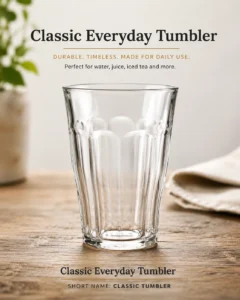
Best for: Budget buyers & households with kids
DuraLex Picardie Tempered Glass Tumblers (Set of 6)
DuraLex’s tempered glass is literally tested by dropping it, and the Picardie tumbler has been in continuous production since 1945 for good reason. These are not purpose-built beer glasses, but they are the toughest everyday vessel you can buy at this price. Tempered glass is roughly three times stronger than standard soda-lime glass, which means they survive the kind of kitchen accidents that would shatter a Libbey shaker. The slight taper also makes them comfortable to hold without being as awkwardly narrow as a straight-sided shaker.
Pros
- Tempered glass is extremely chip-resistant
- Made in France, consistent quality
- Dishwasher and microwave safe
Cons
- Not a dedicated beer glass shape
- Limited to 12.5 oz — smaller than a US pint
Best Pint Glasses — Head-to-Head Comparison
| Glass | Style | Volume | Material | Best For | Rating | Price Range |
|---|---|---|---|---|---|---|
| Libbey 16 oz Shaker | American Shaker | 16 oz | Soda-lime glass | Everyday use | $2–$3 / glass | |
| Spiegelau IPA Glass | Nucleated Craft | 19 oz | Lead-free crystal | IPAs, pale ales | $12–$15 / glass | |
| Anchor Hocking Nonic | British Nonic | 20 oz | Soda-lime glass | British ales, stouts | $4–$6 / glass | |
| Rastal Teku 3.0 | Tulip / Stemmed | 14.2 oz | Thin-blown glass | Saisons, sours, Belgians | $18–$25 / glass | |
| DuraLex Picardie | Tempered Tumbler | 12.5 oz | Tempered glass | Budget / high-traffic use | $4–$5 / glass |
Pint Glass Buying Guide: 5 Things to Know Before You Buy
👉 Tip 1: Buy Glass, Not Plastic
Plastic “pint glasses” are popular for outdoor use, but even BPA-free plastic leaches micro-odors over time that affect beer flavor. Glass also maintains temperature better. Reserve plastic for camping and festivals only — for home use, glass is always the right call.
👉 Tip 2: Match Volume to Your Most Common Bottle or Can Size
A 16 oz American pint glass works perfectly for 12 oz and 16 oz cans with room for a head. If you regularly buy 500 ml imports or British ales, buy the 20 oz nonic instead. Constantly stopping a pour mid-way is annoying and looks sloppy when serving guests.
👉 Tip 3: Rinse with Cold Water Before Pouring
This is the single biggest improvement most home drinkers can make without spending a dollar. Rinsing with cold water removes detergent residue and creates a thin film that prevents the beer from sticking to a dry glass wall — which kills carbonation on contact. This is standard practice in any quality bar.
👉 Tip 4: Never Dry with a Lint-Shed Towel
Fabric fibers transfer to glass and create unwanted nucleation points that blow out your beer’s carbonation too fast. Air-dry your best glasses upright on a rack. If you must towel-dry, use a lint-free microfiber cloth dedicated only to glassware.
👉 Tip 5: Nucleation Only Matters for Carbonated Beers
If you drink a lot of cask-conditioned ales, real ales served on a beer engine, or session sours with low carbonation, skip the nucleated glass. Those laser-etched rings work by releasing CO2 — there has to be enough dissolved CO2 in the beer for the effect to be visible and meaningful. For lightly carbonated styles, a standard tulip is the better choice.
Frequently Asked Questions About Pint Glasses
Final Verdict: Which Pint Glass Should You Buy?
After all the testing, the answer is rarely one glass — it is two. Start with the Libbey 16 oz Shaker Pint set as your everyday workhorse. It is affordable, durable, and honest about what it is. Then add a set of Spiegelau IPA Glasses or Rastal Teku 3.0s for beers that deserve more attention. That combination covers 95% of drinking occasions without cluttering your cabinet.
If you only drink British ales or want a single versatile option for everything from a morning coffee stout to an afternoon bitter, the Anchor Hocking Nonic at 20 oz is your glass. It is unpretentious, properly sized, and built for the way most people actually drink.
Whatever you choose, the best pint glasses are the ones you actually use. A beautiful Teku collecting dust because it feels too precious to drink from every night is less useful than a six-pack of honest shaker pints you reach for without a second thought. Buy well, rinse cold, and pour properly — that combination will improve every beer you drink.
Ready to Upgrade Your Pint Glass?
The Libbey 16 oz Shaker Pint remains our top overall pick — trusted by bars, tested at home, and priced to buy without hesitation.